Solar & air conditioning
Cool the house on the output you would otherwise export
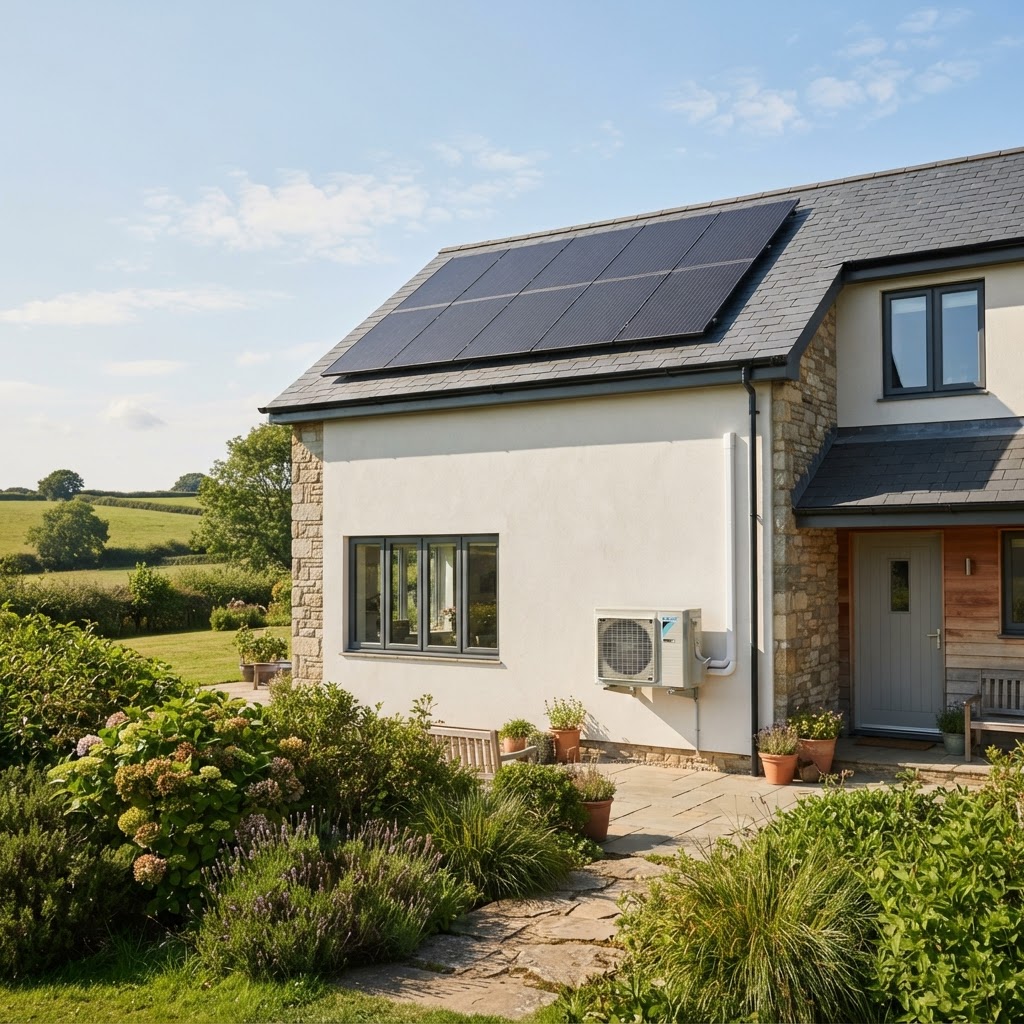
Air conditioning is a modest load — a few hundred watts, not kilowatts. Panels you already own will cover it comfortably while the sun is up, and cover almost none of it after dark. Here is what that actually looks like, with the arithmetic on show.
- 0.25 kWh
- electricity a 3.5 kW unit uses in an hour of cooling
- 9–5
- roughly, the hours a roof array is producing
- 70%
- of a daytime-cooled system's use, on an average summer day
The timing problem
Solar is a daytime thing. Cooling is often an evening thing.
A roof array does almost all of its work between about nine in the morning and five in the afternoon. Most homes ask for cooling later than that, when the house has soaked up the day's heat. Every hour you move into the generating window is worth more than an hour shifted out of it.
- Cooling before you get home — running a bedroom or office unit from mid-morning uses generation that would otherwise be exported.
- Cooling after six — almost all of it is imported, unless a battery is holding the afternoon's surplus.
An illustrative summer day
Shapes only — the volumes depend on your array, roof direction and weather. The point is the overlap, not the height.
Your numbers
How much of it could come off your roof?
The same calculator we use for plain running costs, with your array and the hours you actually run the system added in. Change the timing slider and watch the answer move — that is the honest lesson of the whole page.
1. The system
2. Your panels
A typical three-bed semi carries three to four kWp. If you are not sure, check the installation paperwork or your inverter app.
3. The day
4. Your electricity tariff
Each kWh you use from your own roof saves this rate. Exporting it instead usually pays a good deal less.
5. When the system runs
An even split between daytime and evening.
6. A battery
I have (or plan) a home battery
Modelled as about 5 kWh of usable capacity, charged from the day's leftover generation and 10% lost in the round trip.
Estimated daily cost
On the grid alone
£0.09
With your panels
£0.05
- Used straight from the panels
- 0.14 kWh
- From a battery, later
- 0.00 kWh
- Still bought from the grid
- 0.22 kWh
An estimate, not a promise. It assumes the panels are free to serve the air conditioning at those times, and that nothing else in the house is drawing the same generation.
Worked examples
Four households, the same panels, very different results
All four figures use a 4 kWp array, a 3.5 kW system and electricity at 24.5p per kWh. Same hardware each time — only the hours of use change.
Cooling a home office, 11am to 5pm
3.5 kW system · 4 kWp array · average summer day · no battery
- Electricity used
- 1.48 kWh
- From the panels
- 1.04 kWh (70%)
- From the grid
- 0.44 kWh
- Cost
- £0.11 instead of £0.36
The best case, because the unit runs while the roof is working. Most of the day's generation is still spare for the rest of the house.
Cooling the lounge, 5pm to 11pm
3.5 kW system · 4 kWp array · average summer day · no battery
- Electricity used
- 1.48 kWh
- From the panels
- 0.30 kWh (20%)
- From the grid
- 1.18 kWh
- Cost
- £0.29 instead of £0.36
Only the first hour or so overlaps with generation. The saving is real but small, and it disappears entirely on a winter evening.
The same evening, with a 5 kWh battery
3.5 kW system · 4 kWp array · average summer day · battery fitted
- Electricity used
- 1.48 kWh
- From the panels
- 1.48 kWh (100%)
- From the grid
- 0 kWh
- Cost
- £0.00 instead of £0.36
The afternoon's surplus carries the evening, after round-trip losses. The battery is doing the work here, not the panels on their own — and it is usually bought for the whole house, not for the air conditioning.
Heating, 7am and 7pm, in January
3.5 kW system · 4 kWp array · winter day · no battery
- Electricity used
- 2.39 kWh
- From the panels
- 0.24 kWh (10%)
- From the grid
- 2.15 kWh
- Cost
- £0.53 instead of £0.58
Winter days generate roughly a tenth of June, and heating happens when the panels are dark. Treat solar as a summer benefit and budget the winter heat separately.
These are estimates built from published efficiency figures and typical UK yields. Your own roof, tariff, export rate and habits will move them — sometimes a lot. We would rather show you a modest, defensible number than an attractive one.
Where it stops working
What solar will not do for you
Anyone quoting a guaranteed annual saving from your panels has not seen your roof, your meter or your habits. These are the four things that decide whether the numbers hold up.
The house comes first
Your array serves everything in the house at once. If a car is charging or the immersion is on, there is less left for cooling — and those loads are far bigger than an air conditioning unit.
The hot hour is late
Peak cooling demand usually lands between four and seven in the evening, just as generation falls away. Without a battery, that hour is bought at full import price.
Winter heating is grid heating
A January day produces around a tenth of a June day, and the panels are dark when the heating comes on. Solar is a summer benefit here, and we won't pretend otherwise.
The rates move the answer
Every kWh used at home saves your import rate; exported, it earns the export rate, which is usually lower. If either changes, or you move to a time-of-use tariff, the maths changes with it.
Shading, roof direction, inverter limits and dirty panels all pull real output below the rated figure too. Our numbers are estimates for comparison, not a forecast of your bill — your own monitoring app is the only reliable record of what your roof actually does.
Questions
Solar questions we get asked
Will my solar panels run the air conditioning?
While the panels are generating, yes — the system draws on the roof first and imports only what is missing. A 3.5 kW system cooling uses roughly 0.25 kWh an hour, which a 4 kWp array out-produces comfortably at midday in summer. After the sun is down the unit runs entirely on imported electricity.
How much of the running cost will it actually cover?
It depends almost entirely on when you run it. A unit working through a sunny afternoon might cover most of its own running; one that runs from five in the evening covers little or nothing. The worked examples above show four identical systems with very different results rather than one headline number.
Do I need a battery to make this worthwhile?
Not if you mostly cool during the day. A battery extends the benefit into the evening, but it is usually bought for the whole house, and we would not suggest buying one just for an air conditioning unit.
Is exporting my generation a reasonable alternative?
It is fine, it just pays less. Export tariffs have improved but are typically below what you pay for imported electricity, so each kWh you use at home is worth more than the same kWh sold. That is the entire argument for running the unit while the sun is up.
Does solar help with heating in winter?
Barely. A winter day generates about a tenth of what a June day does, and heating is usually wanted in the morning and evening when output is nil. Budget winter heating separately, and treat any solar contribution as a bonus rather than something to plan around.
Will solar cover the whole house's electricity?
That depends on the array and the household. An air conditioning system is one of the smaller loads in a modern home; an electric car or an immersion heater will use the day's generation several times over. We can only speak to the part we install.
Do you install the panels as well?
No — we install air conditioning, and we would rather say so than pretend to be an all-trades outfit. We will site the outdoor unit and set up the controls to suit your array, and we are happy to work alongside your solar installer.
Got panels? Let's put the cooling where the sun is
At the survey we will size the system for the rooms, site the outdoor unit properly, and show you the running cost with and without your generation — the same figures as the calculator above, at your own tariff.